

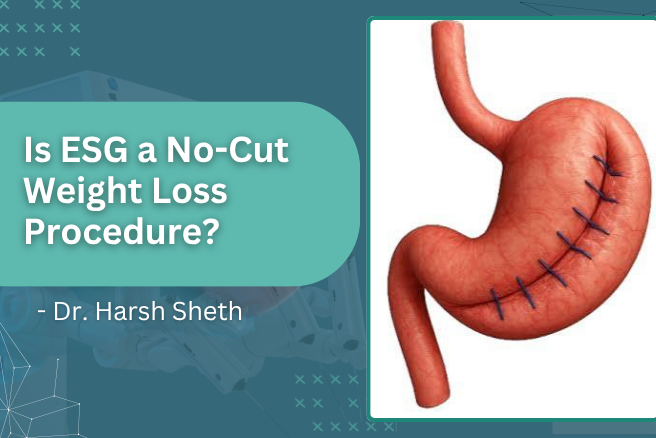
ESG is genuinely a no-cut procedure. A flexible endoscope passes through the mouth, a suturing device stitches the stomach into a narrow sleeve from inside, and volume reduces by roughly 70%. No skin incisions, no ports, no scarring. Most patients go home within 24 hours and return to normal activity within a week. Weight loss runs 15 to 20% of total body weight at two years, less than surgical bariatric options but clinically significant for the right patient profile.
According to Dr. Harsh Sheth, an experienced bariatric surgeon in Mumbai,”ESG fills a real gap. Some patients need more than medication but aren’t ready for surgery, and this gives them a clinically valid path that doesn’t feel like a major life event.”
Wondering whether ESG suits your weight loss situation?
What Actually Happens During an ESG Procedure?
ESG is performed in an operation theatre by a specialised surgical or gastroenterology team, but unlike conventional surgery, everything works through a single flexible scope passed through the mouth.
- Scope and suturing: The endoscope carries an OverStitch device that places full-thickness sutures along the stomach’s greater curvature, folding it inward into a narrow tube without cutting or removing a single piece of tissue.
- Going home fast: Because there’s no wound anywhere on the body, most patients discharge within 24 hours and skip the ward stay that any surgical procedure would require.
- Back to life quickly: Two weeks on liquids, soft food after that, and normal activity usually resumes by day 7, which is a recovery window no surgical weight loss option gets close to.
- Can be redone: If results slow down or sutures loosen over time, the procedure can be revised or repeated, something that’s simply not possible once surgical sleeve removes stomach tissue permanently.
Not every obesity case suits ESG and selecting the right patients is what separates good outcomes from disappointing ones. Learn more about gastrointestinal surgery options for your specific condition.
How Does ESG Compare to Surgical Sleeve Gastrectomy?
People ask this constantly. Both shrink the stomach. But how they get there, and where they end up, are pretty different stories.
- The weight loss gap: ESG lands between 15 and 20% total body weight loss at two years while sleeve surgery pushes 25 to 30%, so if someone’s BMI is well above 40 and they need maximum loss, ESG probably isn’t the right call for them.
- Much lower risk: Serious adverse events with ESG sit under 2% in large real-world cohort data, surgical bariatric procedures carry higher risks tied to anaesthesia, wound healing, and internal complications that ESG simply doesn’t have.
- Who actually fits: Patients with BMI between 30 and 40, at least one obesity-related condition like diabetes or hypertension, who’ve genuinely tried lifestyle and medication changes and hit a wall with both.
- Metabolic wins beyond weight: Diabetes markers, blood pressure readings, and cholesterol levels all improve meaningfully after ESG in study data, so the benefits aren’t only showing up on the scale.
Choosing between ESG and surgery isn’t about which sounds better, it’s about matching the right tool to the right patient at the right time. Read more on what decides surgical eligibility: bariatric surgery eligibility.
Why Choose Dr. Harsh Sheth
Dr. Harsh Sheth is a Fellow in Advanced Minimal Access and Bariatric Surgery with over ten years of specialised experience, trained under Dr. Muffazal Lakdawala at Saifee Hospital, and a Stanford-India Biodesign Fellow with multiple medical device patents. He consults at Saifee Hospital, Breach Candy Hospital, Jaslok Hospital, and Genèse Clinic.
Most patients come in asking whether ESG is right for them. Some leave booked for it. Some leave with a different plan entirely. Either way they leave with a clear answer. Call +91 91370 80299 to book your consultation.
Frequently Asked Questions
Is ESG painful after the procedure?
Most patients report mild bloating and discomfort for a few days, which settles without major pain management.
Does ESG require general anaesthesia?
ESG is most commonly performed under general anaesthesia, with faster recovery than surgical bariatric procedures.
Can ESG be repeated if weight loss isn't enough?
Yes, the procedure can be revised or repeated in cases of insufficient weight loss or suture loosening over time.
Is ESG available in India?
ESG is available at select advanced bariatric and GI centres in India and is performed by trained endoscopists.
Disclaimer – This blog is for educational and informational purposes only and should not be considered professional advice.
