by Dr Harsh Sheth | Jul 16, 2026 | Blog
Human hands shake. Not a lot, not noticeably in everyday life, but under a laparoscope working millimetres from a bile duct or a blood vessel, even a small tremor is a problem. Robotic systems like the da Vinci filter those hand movements electronically before...
by Dr Harsh Sheth | Jul 14, 2026 | Blog
Cholecystectomy (gall bladder removal) is a very common abdominal surgery at present. Most people report that it aids digestion or helps alleviate pain, but of course, one is asked, “What will happen to my liver if my gall bladder is removed? The good news is...
by Dr Harsh Sheth | Jul 4, 2026 | Blog
Most people are surprised by how quickly things settle after gallbladder removal. Without the gallbladder storing and concentrating bile between meals, the liver just keeps releasing it steadily into the small intestine all day. A fatty meal lands and there’s no...
by Dr Harsh Sheth | Jul 3, 2026 | Blog
One of the most frequently performed surgeries is gall bladder removal, or cholecystectomy. The vast majority of people recover rapidly and return to normal life within a few weeks. However, many patients have a startling realization once their first phase of recovery...
by Dr Harsh Sheth | Jun 18, 2026 | Blog
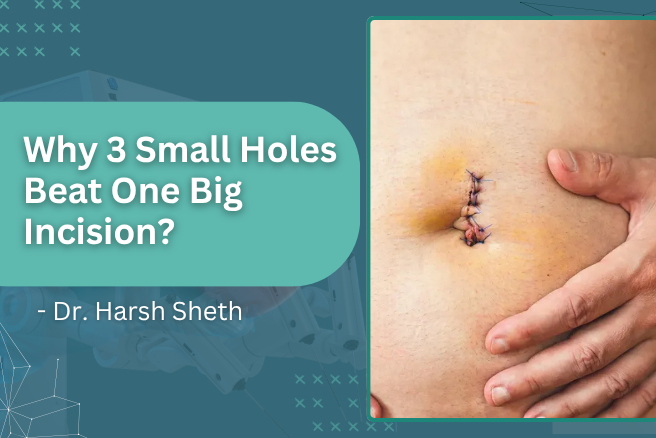
Laparoscopic surgery replaces one large abdominal incision with three small ports, each under a centimetre wide. A camera and surgical instruments pass through these ports, giving the surgeon full visibility and control without cutting through major muscle groups. The...