
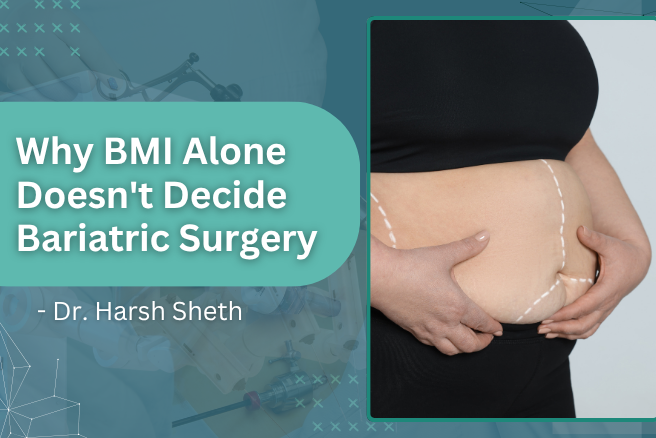
A BMI of 40 plus, or 35 to 39.9 paired with comorbidities, is the traditional surgical threshold. That number opens the conversation. But here’s the thing: it doesn’t close it. Today’s guidelines look at obesity as a chronic metabolic disease, so what tips the decision is rarely the BMI itself. What actually matters? Metabolic labs, surgical risk, and whether the patient is genuinely ready for what comes after.
According to Dr. Harsh Sheth, an experienced bariatric surgeon in Mumbai, BMI tells us where to start. The actual call sits inside the lab work, the comorbidities, and whether someone can realistically hold the lifestyle shift surgery asks of them.
What clinical factors decide bariatric surgery candidacy beyond BMI?
Here’s where it gets real: the verdict comes from comorbidities, labs, and patient history read together. Not from a number on a chart.
Comorbidities: Type 2 diabetes, hypertension that won’t respond to medication, sleep apnea, fatty liver, any of these can make a BMI of 35 a clear surgical case on their own. Bottom line: the metabolic load does the talking.
Fat distribution: Two patients, same BMI, completely different surgical answers. The reason? Visceral fat. The fat sitting around abdominal organs drives cardiovascular and metabolic risk in ways subcutaneous fat simply doesn’t.
What’s been tried: Six to twelve months of supervised diet, exercise, medication, none of it holding. And here’s why that matters: most insurance protocols want this on paper anyway, and that track record genuinely counts when surgical candidacy is being weighed.
Age and trajectory. A 38-year-old with a worsening curve and climbing HbA1c reads very differently from a 62-year-old whose weight has been stable for twenty years. Put simply: direction of travel matters.
A proper weight loss surgery evaluation reads these markers together, which is the only way the answer becomes useful.
How does BMI compare to other candidacy markers in real assessment?
Now consider this: each marker pulls a different weight in the decision. And that weight shifts based on what the patient is actually presenting with.
Assessment Marker | What It Measures | Clinical Significance |
BMI | Weight relative to height | Entry threshold, not a verdict |
HbA1c | Three-month blood sugar | Predicts diabetes remission post-surgery |
Visceral fat | Abdominal organ-level fat | Drives cardiovascular risk directly |
Comorbidity load | Number and severity of conditions | Often the deciding factor |
Lab work: HbA1c north of 6.5, fasting insulin, lipid profile, liver enzymes. Here’s what they do: these shape candidacy and also push the choice between sleeve gastrectomy and gastric bypass in one direction or the other.
Imaging: An ultrasound flagging fatty liver paired with a sleep study confirming apnea. The effect? It moves a borderline BMI patient firmly into candidate territory more often than people assume.
Headspace: Psych clearance isn’t paperwork. Think about what surgery actually asks: lifelong dietary discipline, supplementation, follow-ups for years. The assessment exists to confirm the patient understands that.
Surgical fitness: Cardiac function, how the patient handles anaesthesia, any prior abdominal surgery. All of it feeds into one thing: which procedure makes sense and how long pre-op prep will take.
Our blog on laparoscopic vs robotic bariatric surgery is worth a read if you want to see how procedure choice tracks back to patient profile.
Why Choose Dr. Harsh Sheth?
Dr. Harsh Sheth is a fellowship-trained bariatric and laparoscopic surgeon with deep experience across advanced metabolic procedures, including complex revisional cases that other centres often refer out. His evaluation reads metabolic markers, comorbidity load, and long-term lifestyle fit alongside the BMI on the referral. Never just the number.
What patients consistently mention is the clarity walking out of consultation. Every candidacy decision arrives with a written rationale, why surgery is or isn’t on the table, which procedure fits their profile, and what twelve to twenty-four months will realistically look like.
Frequently Asked Questions
Is BMI 35 enough for bariatric surgery?
Yes, when paired with comorbidities like type 2 diabetes, sleep apnea, or hypertension.
Can a patient below BMI 35 qualify for surgery?
Rarely, though severe uncontrolled metabolic disease occasionally justifies surgery below the standard threshold.
What lab tests decide bariatric candidacy?
HbA1c, fasting insulin, lipid profile, liver enzymes, and thyroid function form the core panel.
How long is the bariatric evaluation process?
Typical evaluation spans two to four weeks across consultations, labs, imaging, and psychological clearance.
Refrences
- Bariatric Surgery Indications and Patient Selection — National Institutes of Health
- Obesity and Metabolic Comorbidities — World Health Organization
