

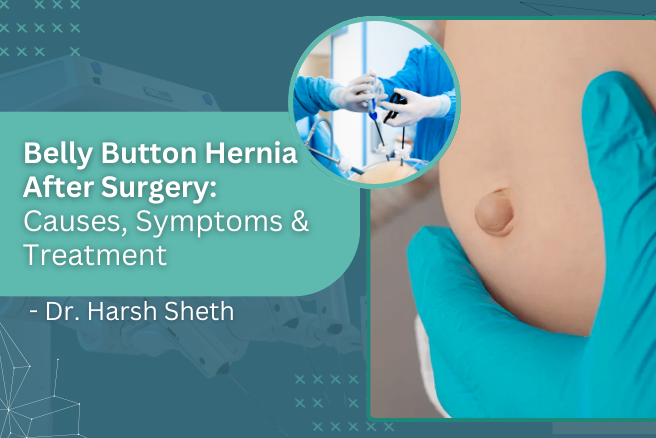
Noticing a swelling near your belly button after surgery can be concerning. Many patients assume it is part of normal healing. However, in some cases, it may indicate a belly button hernia after surgery, medically called an umbilical incisional hernia or port site hernia.
This condition develops when abdominal tissue or intestine pushes through a weakened area near the navel following a surgical procedure. While some hernias remain small initially, they can gradually enlarge and lead to complications if ignored.
Early evaluation helps prevent emergency surgery.
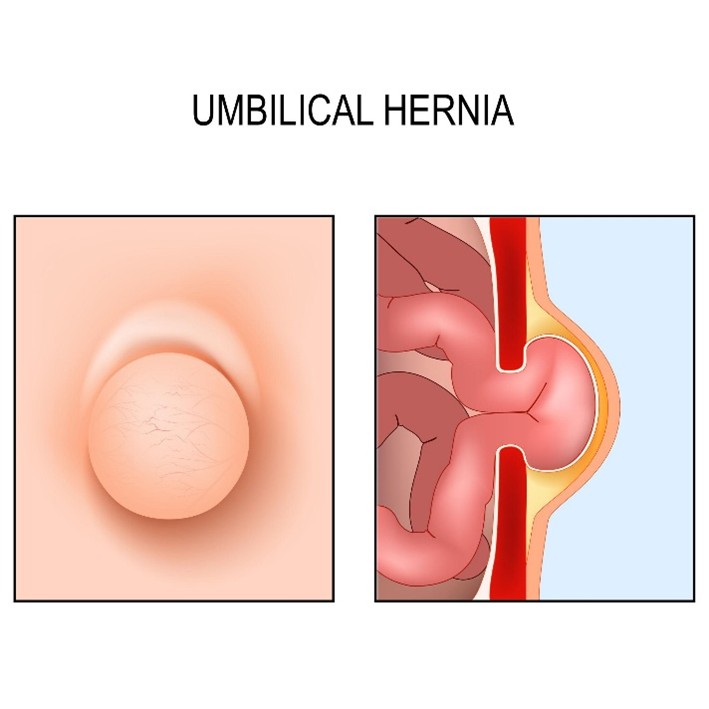
What Is a Belly Button Hernia After Surgery?
A belly button hernia after surgery occurs when the abdominal wall becomes weak at the umbilicus and internal contents protrude outward.
It may develop after:
Laparoscopic surgery (umbilical port entry)
Appendectomy
C-section
Any abdominal surgery involving the navel
Why Does It Develop After Surgery?
6 Common Causes
- Surgical site infection
- Obesity or increased abdominal pressure
- Poor wound healing
- Chronic cough
- Constipation and straining
- Early heavy lifting
Additional risk factors include diabetes, smoking, and poor nutrition.
In clinical practice, infection combined with raised abdominal pressure is the most frequent cause.
7 Warning Signs of Belly Button Hernia After Surgery
- Visible swelling at the navel
- Lump that increases while coughing
- Mild to moderate pain
- Pulling sensation during activity
- Heaviness in the abdomen
- Bulge that reduces when lying down
- Sudden severe pain with vomiting (possible strangulation)
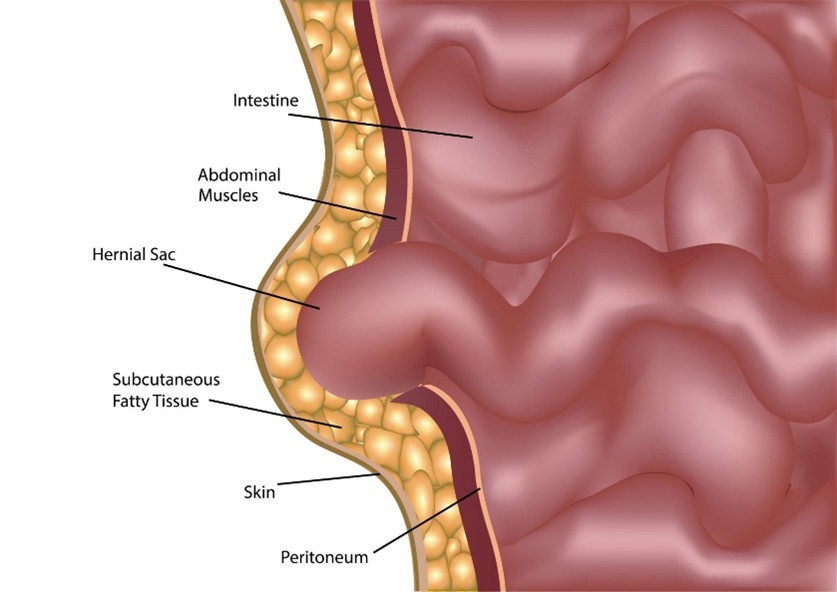
Reducible vs Irreducible Umbilical Hernia
• Reducible hernia: Swelling goes back when lying down or with gentle pressure.
• Irreducible hernia: Swelling remains fixed and may cause pain.
• Strangulated hernia: Blood supply is compromised. Severe pain, vomiting and emergency surgery required.
Delaying treatment increases risk of bowel obstruction.
How Common Is Port Site Hernia After Laparoscopic Surgery?
Umbilical port site hernia occurs in approximately 0.5% to 5% of laparoscopic surgeries.
Risk increases when:
- Port size is 10 mm or larger
- Fascial closure is inadequate
- Post-operative restrictions are ignored
Proper surgical technique significantly reduces occurrence.
Diagnosis of Belly Button Hernia
A hernia does not close on its own. Surgical repair is the only definitive treatment
Laparoscopic Umbilical Hernia Repair
- Small keyhole incisions
- Camera-guided repair
- Mesh reinforcement of abdominal wall
- Minimal blood loss
- Faster recovery
- Reduced infection risk
Preferred for most small to moderate defects.
Open Hernia Repair
- Suitable for larger or complex hernias
- Direct reinforcement of abdominal wall
- Mesh placement for strength
Recovery Timeline After Surgery
- Progressive enlargement
- Increased surgical complexity
- Bowel obstruction
- Strangulation of intestine
- Emergency surgery
Elective repair is always safer than emergency intervention.
What Happens If It Is Ignored?
- Progressive enlargement
- Increased surgical complexity
- Bowel obstruction
- Strangulation of intestine
- Emergency surgery
Elective repair is always safer than emergency intervention.
Cost of Belly Button Hernia Surgery in Mumbai
The cost depends on:
- Size of hernia
- Laparoscopic vs open technique
- Type of mesh
- Hospital stay
- Patient medical condition
In Mumbai, laparoscopic umbilical hernia repair typically ranges between ₹60,000 to ₹1,40,000 depending on complexity and hospital choice.
A detailed consultation provides personalized cost estimation.
Expert Umbilical Hernia Treatment in Mumbai
If you are experiencing swelling near your belly button after surgery, early consultation prevents complications.
Dr. Harsh Sheth, MS (General Surgery), is an advanced laparoscopic and bariatric surgeon in Mumbai with 10+ years of surgical experience in abdominal wall reconstruction and minimally invasive hernia surgery. He practices at Genèse Clinic in Mumbai.
With advanced surgical exposure at Stanford University and All India Institute of Medical Sciences, he specializes in:
- Umbilical hernia repair
- Port site hernia repair
- Incisional hernia surgery
- Complex abdominal wall reconstruction

If you notice persistent swelling or discomfort near your navel after surgery, booking a consultation allows timely diagnosis and appropriate management.
Frequently Asked Questions
1. How long after surgery can a belly button hernia appear?
2. Can a belly button hernia heal without surgery?
3. Is laparoscopic repair better than open surgery?
4. What are emergency symptoms?
5. What is the recurrence rate?
