

You lost the weight. Your sugar and BP came down. Then a few months later, a burning feeling started creeping up your chest after dinner.
Annoying, right? And you’re far from the only one. GERD after sleeve gastrectomy is one of the most common reasons patients come back to a bariatric surgeon. Most cases can be controlled. A few need something more.
“Reflux after a sleeve isn’t something patients should just learn to live with. Once we find the cause, there’s almost always a way to bring it under control.” – Dr. Harsh Sheth, Bariatric Surgeon in Mumbai
Why Does GERD Occur After Sleeve Gastrectomy?
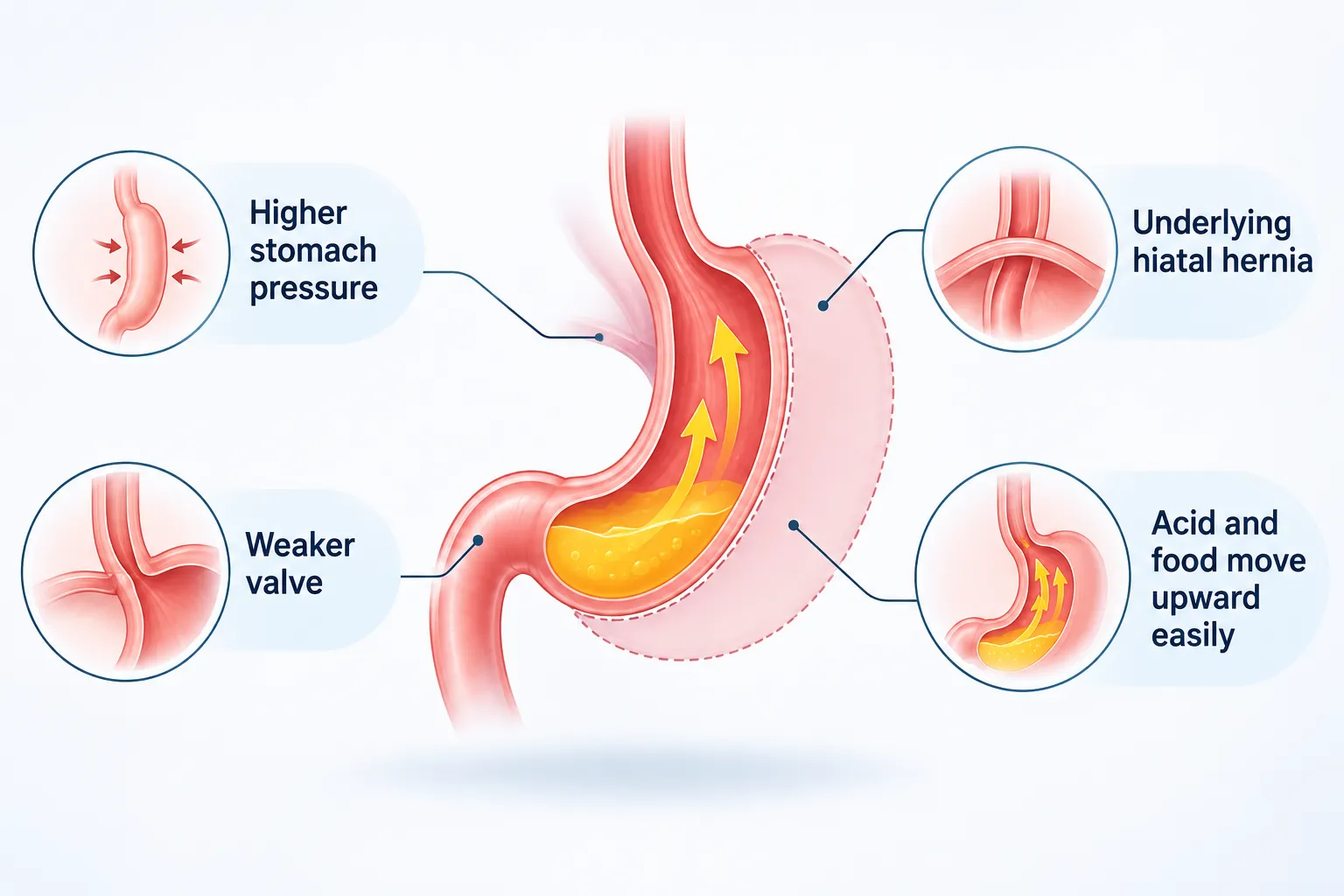
So, why does GERD occur after sleeve gastrectomy? It mostly comes down to the new shape of your stomach. About 80% is removed, leaving a narrow tube.
Understanding how gastric sleeve surgery changes stomach anatomy can help explain why some patients experience reflux after the procedure.
That change brings a few problems:
- Pressure builds faster inside the tube after meals
- The valve at the top of the stomach can loosen
- A small hiatal hernia may have gone unnoticed during surgery
- Acid and food move upward more easily
People who already had reflux before surgery face a higher risk. But even those who never had it can develop it later.
Not sure where to begin? Schedule a consultation with Dr. Harsh Sheth and get your symptoms checked the right way.
What Are the Symptoms of GERD After Gastric Sleeve Surgery?
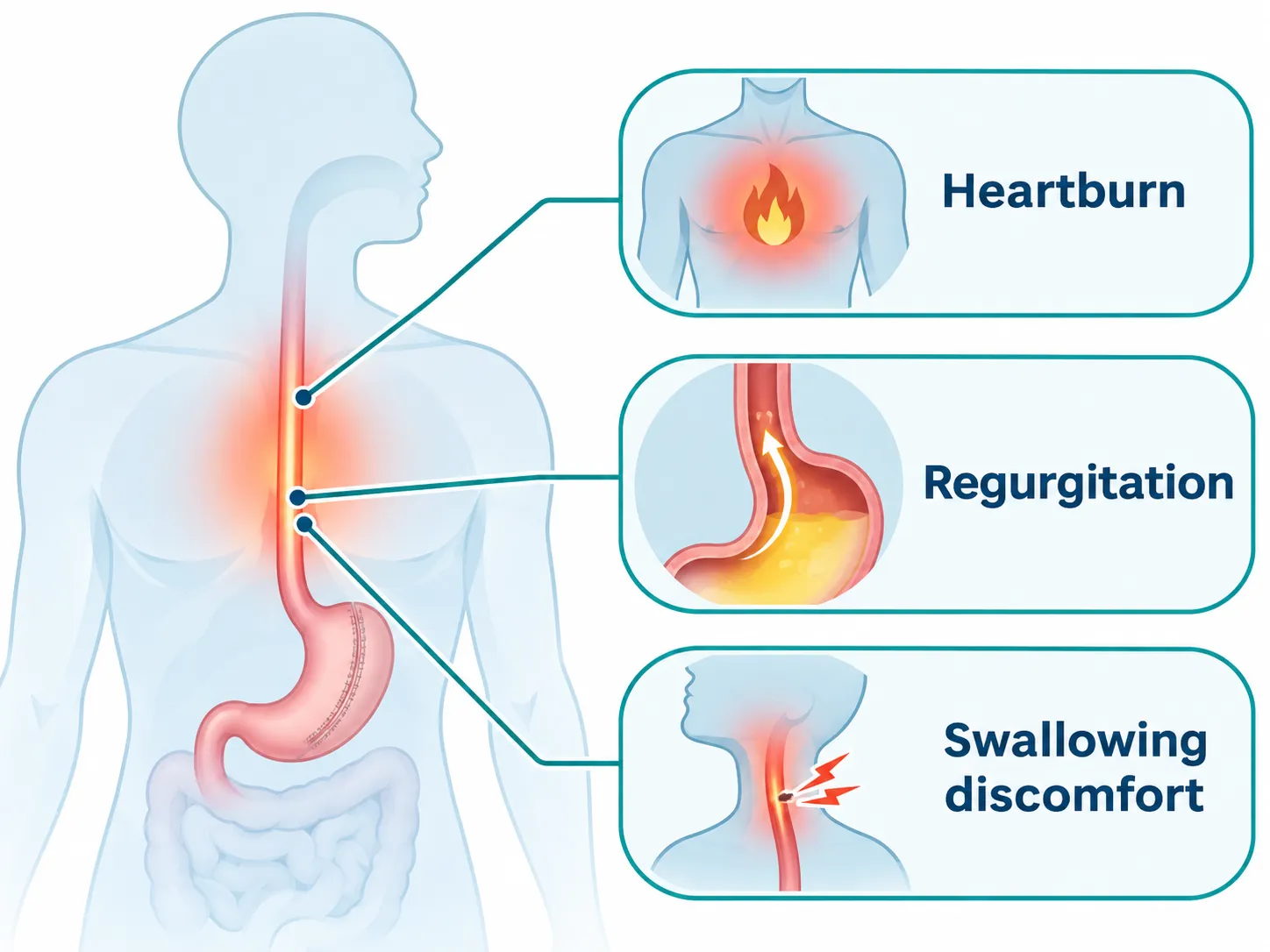
The signs aren’t always dramatic. Some people just feel “off” after eating. Watch for these:
- Heartburn after sleeve gastrectomy, especially at night
- A sour taste or food coming back up
- A dry cough or hoarse voice that won’t clear
- Pain or tightness while swallowing
If this sounds like your week, you’re likely dealing with acid reflux after gastric sleeve. And if it happens more than twice a week, don’t wait it out. These are classic GERD symptoms after bariatric surgery, and they deserve a proper look.
How Is GERD Diagnosed After Sleeve Gastrectomy?
Please don’t self-diagnose with a strip of antacids. Your surgeon needs to see what’s going on inside.
Common tests include:
- Endoscopy to check the food pipe for irritation
- Barium swallow to see the shape of the esophagus and spot any narrowing
- pH study to measure how much acid actually travels up
- Manometry to test how well the food pipe moves
Struggling despite medicines? Speak to Dr. Harsh Sheth’s to find out if revision surgery is right for you.
How to Treat GERD After Sleeve Gastrectomy?
People often ask how to treat GERD after sleeve gastrectomy without another operation. The honest answer is that many can, at least at first.
Start with the basics:
- Eat small meals, slowly
- Stay upright for two to three hours after eating
- Go easy on spicy food, fizzy drinks, caffeine and alcohol
- Raise the head of your bed a little
If that isn’t enough, acid reflux treatment after gastric sleeve usually means acid-lowering medicines like PPIs. They work well for many people. They’re just not meant to be a forever fix without a doctor’s review.
When Is Revision Surgery Needed for GERD After Gastric Sleeve?
Many patients wonder, does acid reflux go away after gastric sleeve? Sometimes it does, as the body settles in over a few months. Sometimes it sticks around.
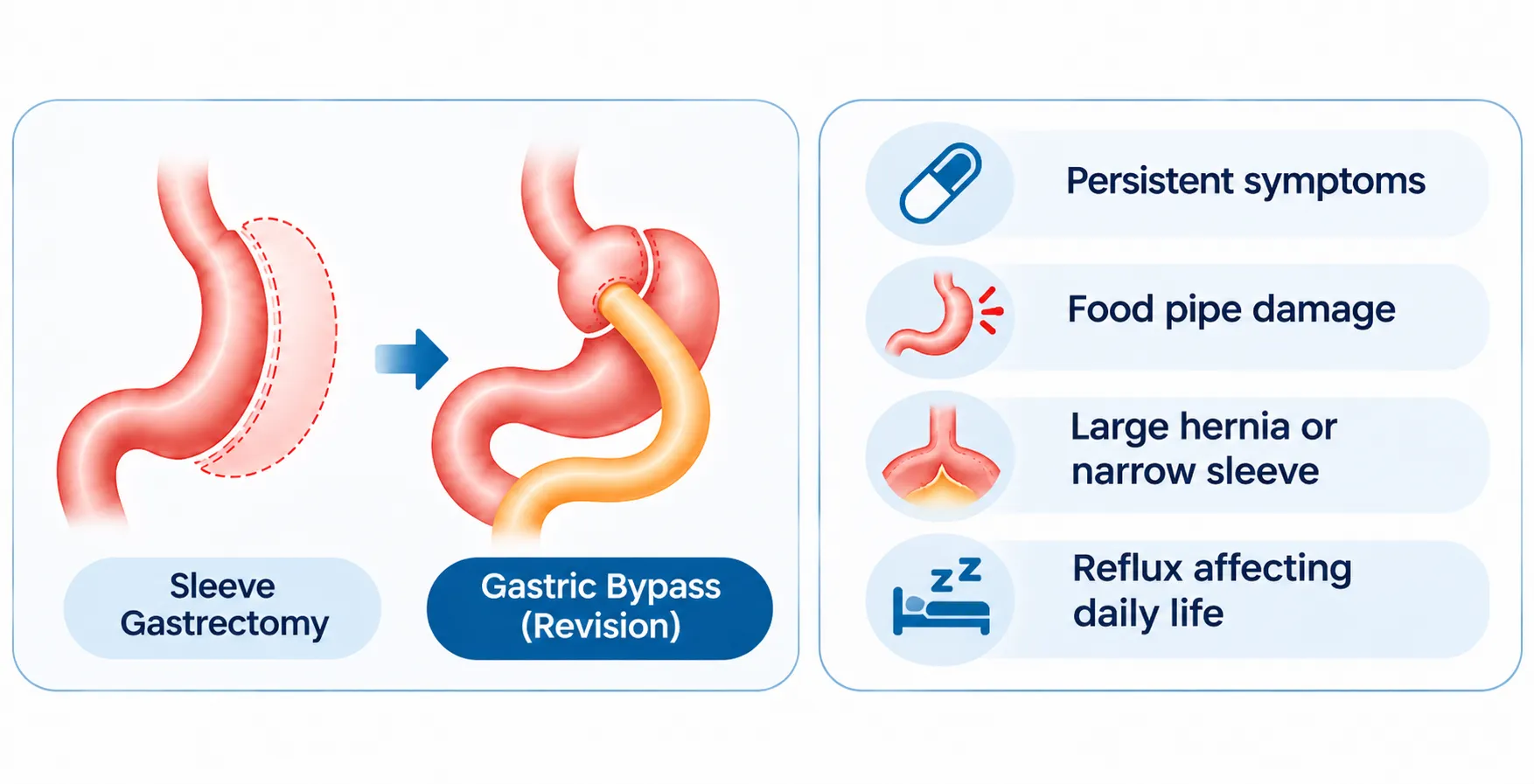
So when is revision surgery needed for GERD after gastric sleeve? Usually when:
- Symptoms continue despite medicines and lifestyle changes
- Endoscopy shows damage to the food pipe
- There’s a large hernia or a twisted, narrow sleeve
- Reflux is hurting your sleep, meals, or daily routine
In these cases, revisional bariatric surgery can help. The most common choice is gastric bypass for GERD, since it changes how food flows and cuts acid exposure sharply. It also keeps your weight in check.
Can GERD Be Prevented After Gastric Sleeve Surgery?
Not always. But you can lower the odds.
- Mention any past reflux to your surgeon before choosing a procedure
- Get a hiatal hernia checked and repaired during surgery
- Follow your diet plan, even when you feel fine
- Don’t skip follow-up visits
The right operation for your body matters more than anything else here.
Have questions about gallbladder surgery before pregnancy? Consult a GI and laparoscopic surgeon for guidance.
Frequently Asked Questions
Is GERD common after a sleeve?
Yes. Quite a few patients develop new or worse reflux.
What calms GERD immediately?
For immediate relief from an active acid reflux or heartburn flare-up, fast-acting over-the-counter (OTC) options and specific home measures can neutralize stomach acid or soothe the esophagus within minutes
Is it dangerous?
If ignored, long-term acid can damage the food pipe. So don’t brush it off.
Will I need another surgery?
Not always. Many improve with diet changes and medicines.
