

You had your gallbladder taken out expecting relief. So when pain after cholecystectomy shows up instead, or worse, doesn’t go away, it’s natural to feel a little betrayed by your own body. Let’s go through what’s actually going on.
“Patients often assume the gallbladder was the source of every symptom they had. Sometimes it was only part of the picture, and that’s exactly why we ask people to come back if pain lingers, instead of just living with it.”- Dr Harsh Sheth, GI and Laparoscopic Surgeon in Mumbai.
If what you’re reading here matches what you’re feeling, don’t just sit back and wonder. Consult Dr. Harsh Sheth for an actual answer instead of a guess.
Is Pain After Cholecystectomy Normal?
Some, yes. You had surgery. They cut tissue, moved it, and sealed it shut. That doesn’t heal overnight.
- The first week or two, mild pain after gallbladder removal is just par for the course
- Incision soreness is common, particularly with laparoscopic procedures
- Oddly enough, a lot of people get shoulder pain too; that’s leftover gas from the surgery, not anything wrong with your shoulder
What isn’t normal is pain that hangs around long past the point you expected to feel back to yourself, or pain that’s climbing instead of fading.
What Causes Pain After Cholecystectomy?
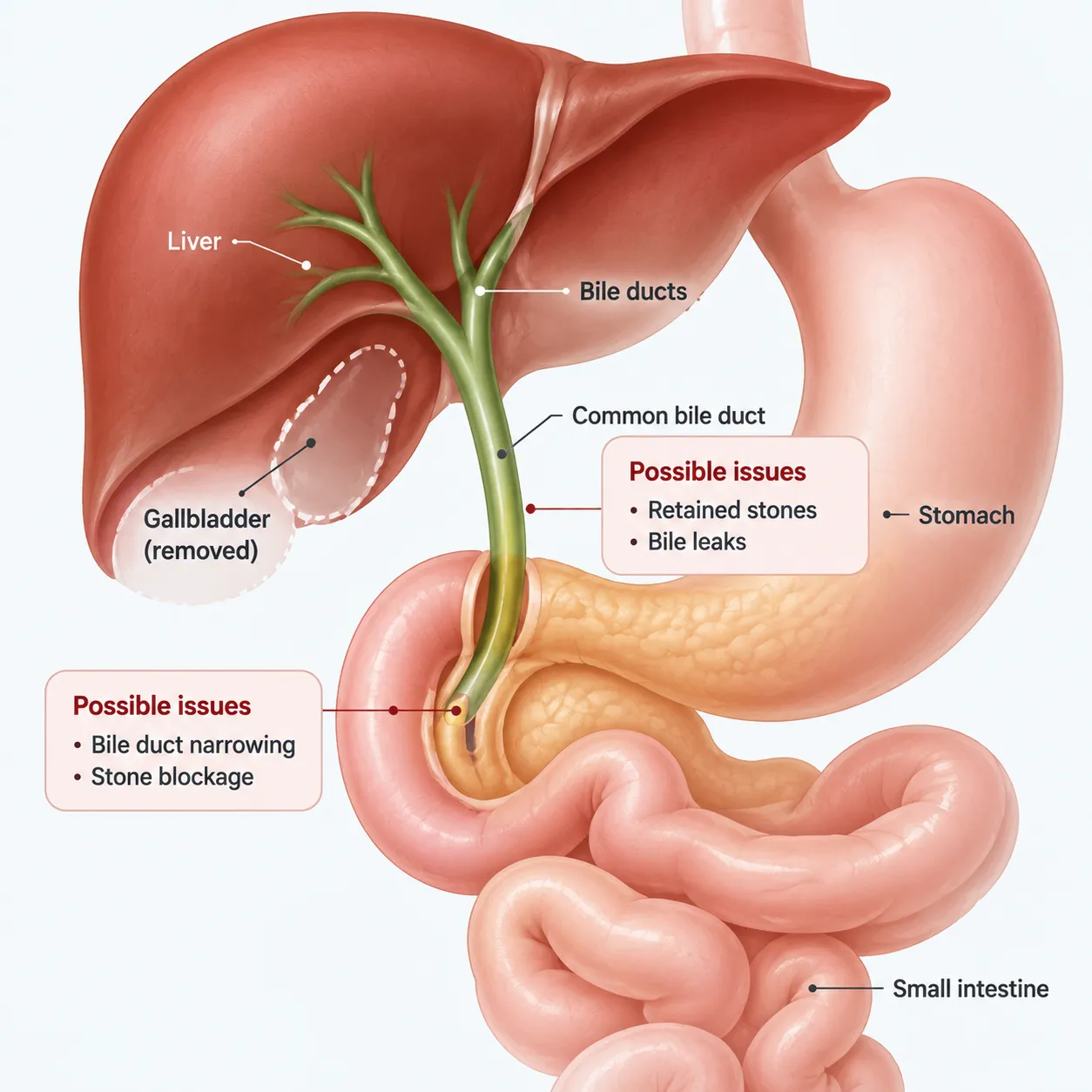
Abdominal pain after gallbladder removal doesn’t always trace back to one obvious thing. A few possibilities:
- Leftover stones or narrowing somewhere in the bile ducts
- Bile leaking out is uncommon, but it does happen and shouldn’t be ignored
- Scar tissue pulling on nearby structures as it heals
- A valve called the sphincter of Oddi not doing its job properly
- Something that was there all along: IBS, reflux just hidden behind gallbladder symptoms until now
Here’s the thing nobody tells you upfront: sometimes the gallbladder wasn’t even the real problem. Surgery removes it, and the original pain is still sitting there, waiting to be figured out.
Why Do I Still Have Pain Months After Gallbladder Removal?
This one trips people up the most. Pain months after gallbladder removal often gets filed under post-cholecystectomy syndrome, which is really just a label doctors use when symptoms stick around without one clear explanation.
You might notice:
- Bloating after meals, worse with anything greasy
- A dull ache that keeps returning under your right ribs
- Nausea that shows up with no obvious pattern
Even specialists don’t fully agree on why it hits some people and skips others. Bile used to flow one way; now it flows another, and some digestive systems just take their time catching up.
When Is Pain After Gallbladder Removal a Warning Sign?
Most of what we’ve covered so far is annoying, not dangerous. But a few symptoms change the picture entirely:
- Fever showing up alongside the pain
- Skin or eyes turning yellow
- Pain that’s sharp or getting worse, not better
- Vomiting that won’t let up
- Redness or swelling near the incision
None of those are “wait it out” symptoms. They’re “call someone today” symptoms, possible signs of infection, a bile leak, or a blocked duct.
Noticing any of these right now? Don’t wait for a routine appointment. Reach out today.
How Is Persistent Pain After Cholecystectomy Diagnosed?
Doctors won’t just take your word for it and guess. They’ll want to look.
- Blood work to check your liver and rule out infection
- An ultrasound or CT scan of the bile ducts and organs nearby
- MRCP, an MRI-based scan for a closer look at the duct system
- ERCP, an endoscopic procedure, if there’s suspicion of a stone or blockage
All of it’s aimed at narrowing down the real causes of pain after cholecystectomy, whether it’s mechanical, structural, or something else going on underneath.
How Is Pain After Cholecystectomy Treated?
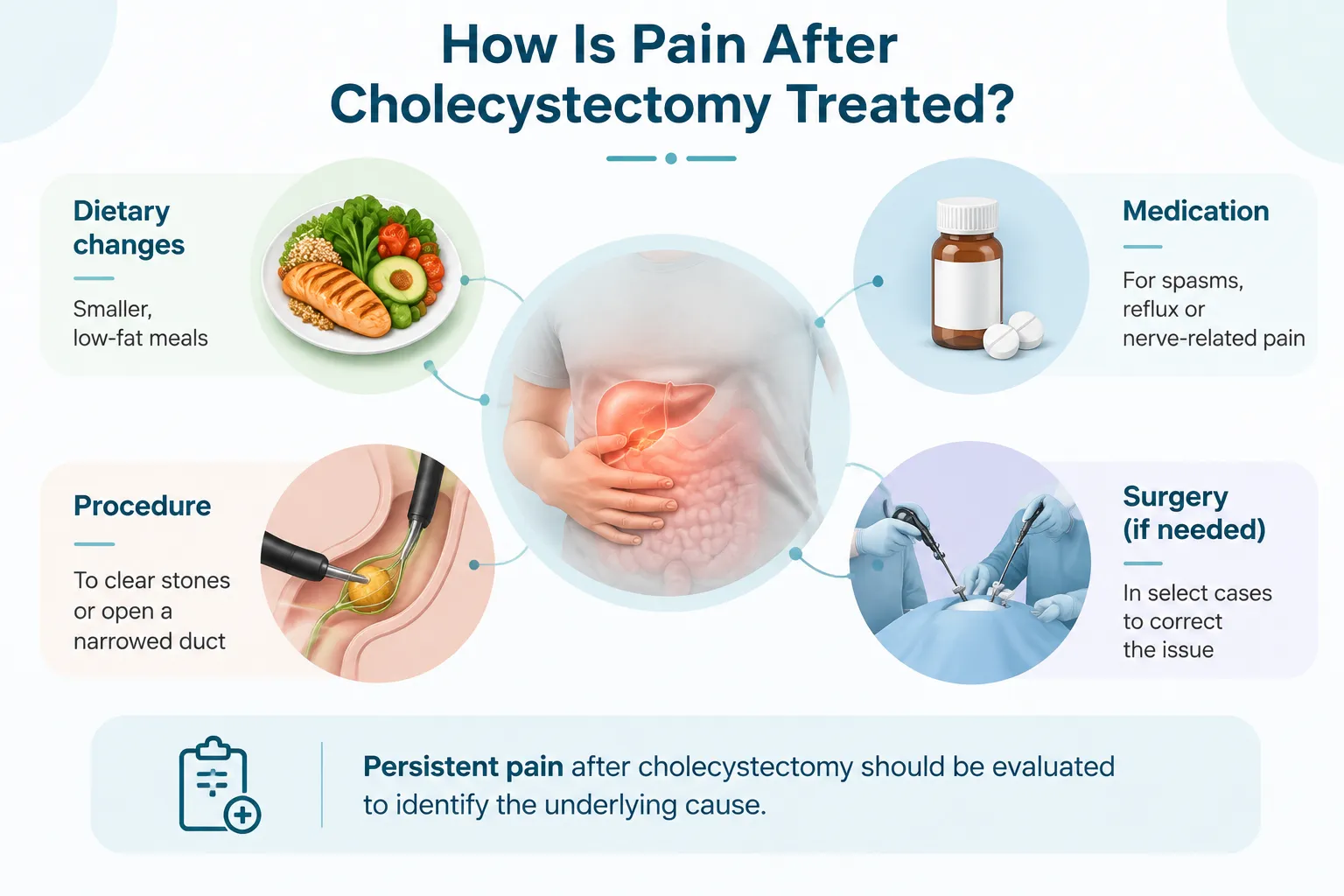
There’s no single fix; treatment follows whatever’s actually causing the pain.
- Eating smaller meals, cutting back on fat, giving digestion less to fight against
- Medication for spasms, reflux, or nerve-related discomfort
- A procedure to clear stones or open up a narrowed duct
- Occasionally, a second surgery if something needs correcting
Persistent pain after cholecystectomy shouldn’t be casually characterized as something that will usually settle with diet changes, because the underlying cause needs to be assessed.
When Should You See a Doctor for Pain After Cholecystectomy?
Not every ache deserves a phone call. But don’t just white-knuckle through it indefinitely either.
Reach out if:
- The pain’s dragged on for weeks with no real improvement
- Fever, jaundice, or vomiting shows up alongside it
- It’s getting in the way of eating, sleeping, or just functioning
- Something just feels off, even if you can’t quite explain it
That last one matters more than people give it credit for. Bodies tend to signal trouble before it becomes an emergency.
Still unsure whether what you’re feeling is worth a visit? Schedule a check-up; it’s a shorter conversation than you think, and far better than guessing.
Frequently Asked Questions
Is it normal to have pain a month after gallbladder surgery?
A little lingering discomfort, sure. But if it’s still noticeable a month later, mention it to your doctor rather than waiting it out.
Can gallbladder removal cause long-term digestive issues?
For some people, yes bloating or looser stools can stick around while the body adjusts to running without a gallbladder.
How long does post-cholecystectomy syndrome last?
No fixed timeline. Some people are through it in a few months; others need further treatment before it fully settles.
Should I be worried about pain after gallbladder removal?
Mild, occasional discomfort usually isn’t cause for alarm. Severe, worsening pain, or pain with fever, is different; that’s worth getting checked.
