

Most people expect keyhole surgery to feel like a minor event, so the first night can come as a surprise. The cuts on the belly are sore. The stomach feels tight, full of gas and a little puffed up. Then, sometime on day one, a dull ache turns up at the tip of one shoulder, which seems to have nothing to do with the operation. It does. Carbon dioxide is pumped into the abdomen so the surgeon can see and work, and any gas left behind irritates the diaphragm. The brain reads that signal as shoulder pain. Once you know this is expected, laparoscopic appendectomy recovery looks a lot less frightening.
According to Dr. Harsh Sheth, laparoscopic surgeon in Mumbai, “In the first two days the body is clearing gas and restarting the gut. Walking a little, eating light and taking pain relief on schedule does more good than lying still. If the pain keeps climbing instead of easing, call your surgical team rather than waiting it out.”
Curious why appendix surgery recovery looks different from one person to the next?
How Does Recovery Unfold Across the First 48 Hours?
Recovery doesn’t move in one smooth line; each stretch of the first two days has its own main complaint.
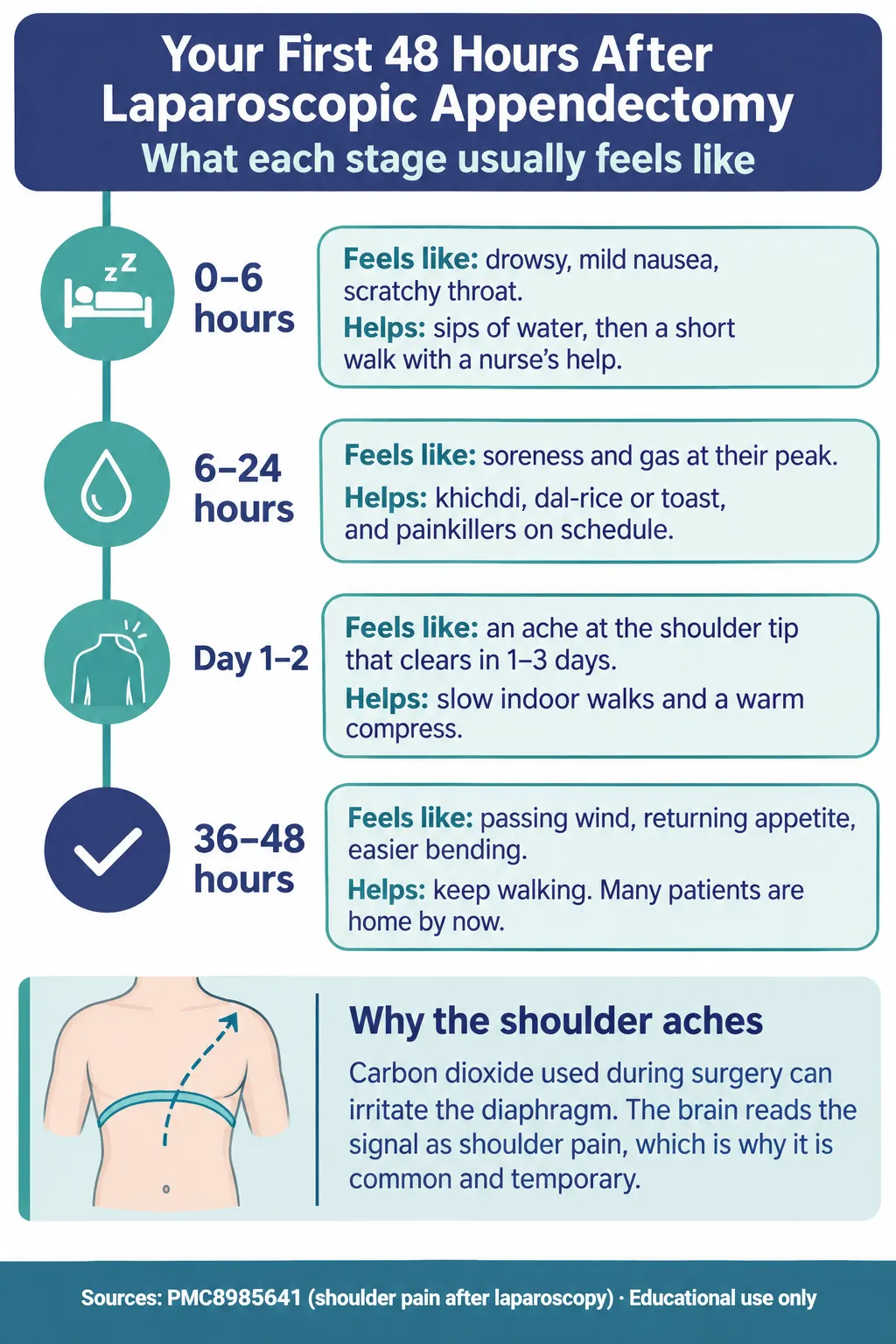
- First 6 hours: You’ll be drowsy, maybe a little queasy, and your throat may feel scratchy from the breathing tube. Sips of water come first, and the nursing staff will often get you up for a short walk the same day.
- 6 to 24 hours: This is when soreness around the port sites and the gassy tightness in the belly peak. Soft food like khichdi, soup or toast goes down better than a heavy meal, and painkillers do more good at the set times than after the pain has built up.
- Day 1 to day 2: The ache at the shoulder tip tends to show up here and fade over one to three days. Slow walks, a warm compress and propping yourself up on pillows all help the gas move along.
- Around 36 to 48 hours: Passing wind is a good sign. Appetite returns, bending gets easier, and many patients are already home; a few go home the same day.
To see how appendix removal fits into wider digestive care, read the gastrointestinal surgery page.
Which Symptoms Are Normal and Which Need Attention?
Most of what you feel in these two days is expected, though a few signs mean you should ring your surgical team.
What you notice | Usually expected | Needs prompt medical advice |
Pain | Soreness at the port sites that eases a little each day | Pain that keeps rising, becomes severe or spreads across the whole belly |
Belly fullness | A tight, gassy belly that improves as you walk | A hard, swollen belly with vomiting and no wind passed |
Temperature | Tiredness and feeling a bit warm | Fever above 38°C (100.4°F) or shivering chills |
Incisions | A little bruising, mild pinkness or a spot of blood | Spreading redness, pus, a bad smell or dressings soaked through |
Chest and shoulder | A dull ache at the shoulder tip, on its own | Chest pain or breathlessness, with or without shoulder discomfort |
- Pain that follows a pattern: Ordinary soreness flares when you cough, twist or get out of bed, then settles with rest and your prescribed medicines. If it keeps building, or the tablets stop touching it, get it checked.
- Fever and wound changes: A temperature above 38°C, redness that keeps spreading or any discharge may point to infection. A small bruise, or a spot of blood on the dressing, is rarely a worry.
- Gut and bladder signals: Vomiting again and again so you can’t keep fluids down, or struggling to pass urine, shouldn’t wait until morning.
- Chest and leg symptoms: Breathlessness, chest pain or a swollen, painful calf are rare after this operation. They can mean a clot or a lung problem, so treat them as urgent.
For practical ways to ease that discomfort, the earlier blog on abdominal pain after laparoscopic surgery goes further.
When Can You Shower, Resume Routine and Return to Work?
Normal life comes back in steps, not all at once.
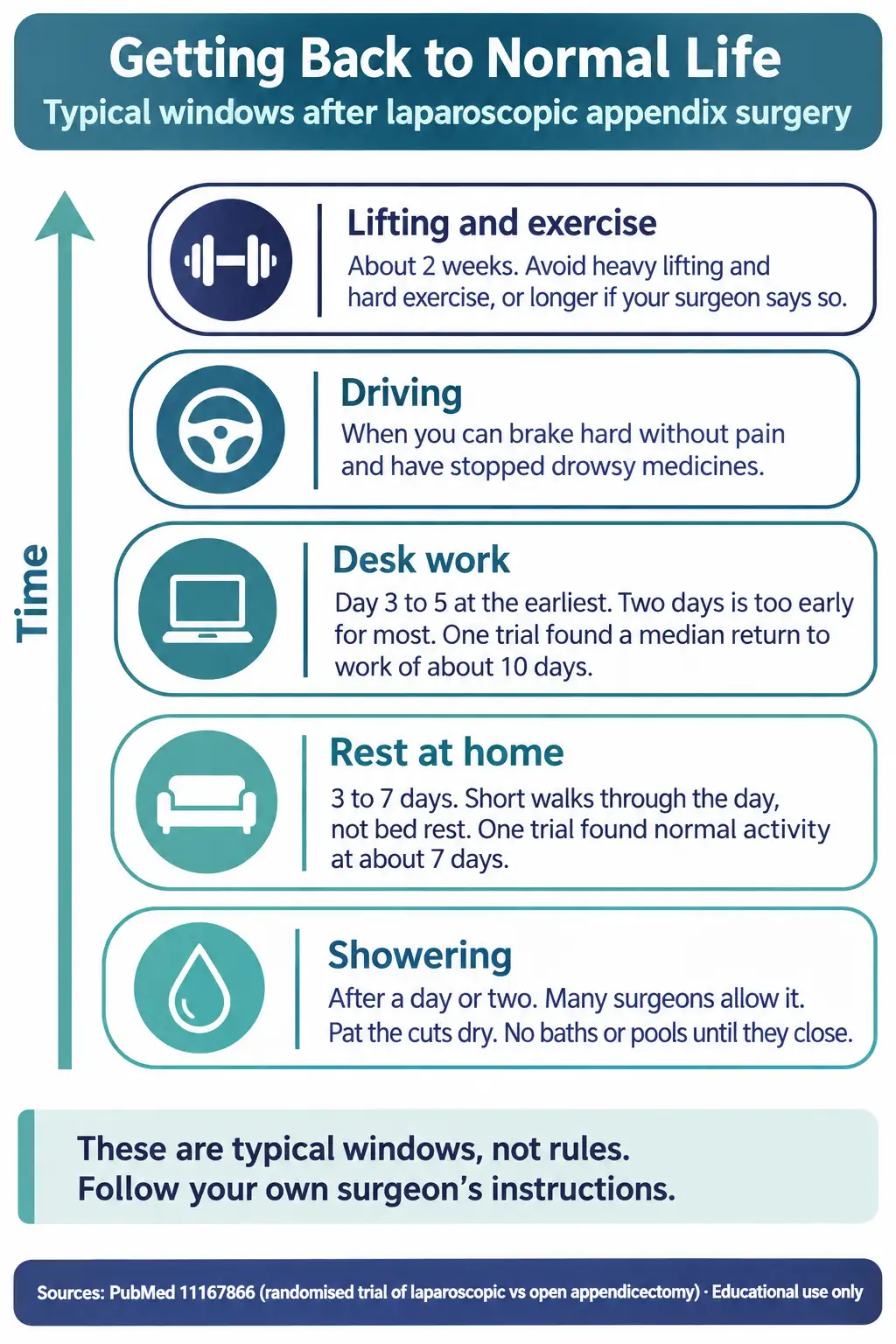
- Showering: Many surgeons are happy for you to wash within 24 to 48 hours, depending on the dressing. Let water run over the cuts, pat them dry, and stay out of baths, pools and scrubbing until the skin has closed.
- Rest days: Plan on three to seven days at home, with short walks through the day instead of bed rest. In one randomised trial, people were back to normal activity after a median of about seven days.
- Work after two days: That’s early, and few people manage it. A desk job from home might be realistic around day three to five if the pain is mild; physical work takes longer, and the same trial put the median return to work at about ten days.
- Lifting and driving: Hold off on heavy lifting and hard exercise for roughly two weeks, or whatever your surgeon says. Get behind the wheel only when you can brake hard without wincing and have stopped any drowsy medicines.
The laparoscopic surgery page explains the technique behind these quicker recoveries.
Key Takeaways: Expect sore port sites, a gassy belly and a strange shoulder ache for the first two days after keyhole appendix removal; walking, light food and painkillers on schedule usually take the edge off. Knowing what laparoscopic appendectomy recovery looks like helps you tell ordinary discomfort from fever, rising pain or a leaking wound, which need a prompt call. Washing, light chores and work come back in stages, so follow your own surgeon’s instructions.
Frequently Asked Questions
How many days should I rest after appendix laparoscopic surgery?
Plan on three to seven days at home, with short walks every day.
Can I go to work 2 days after appendix surgery?
Rarely. Most people need about a week before work feels manageable.
How long until I can shower after laparoscopy?
Often after a day or two, once your surgeon says dressings can get wet.
Is shoulder pain normal after laparoscopic appendix surgery?
Yes. Leftover gas irritates the diaphragm, and the ache fades in days.
References
- Park SJ. Postoperative Shoulder Pain after Laparoscopic Surgery. J Minim Invasive Surg. 2020;23(1):3–4.
- Randomised controlled trial of laparoscopic versus open appendicectomy (hospital stay, return to normal activity and work). PubMed
Disclaimer : This blog is for educational and informational purposes only and should not be considered professional advice.
